The Promise and the Reality Check
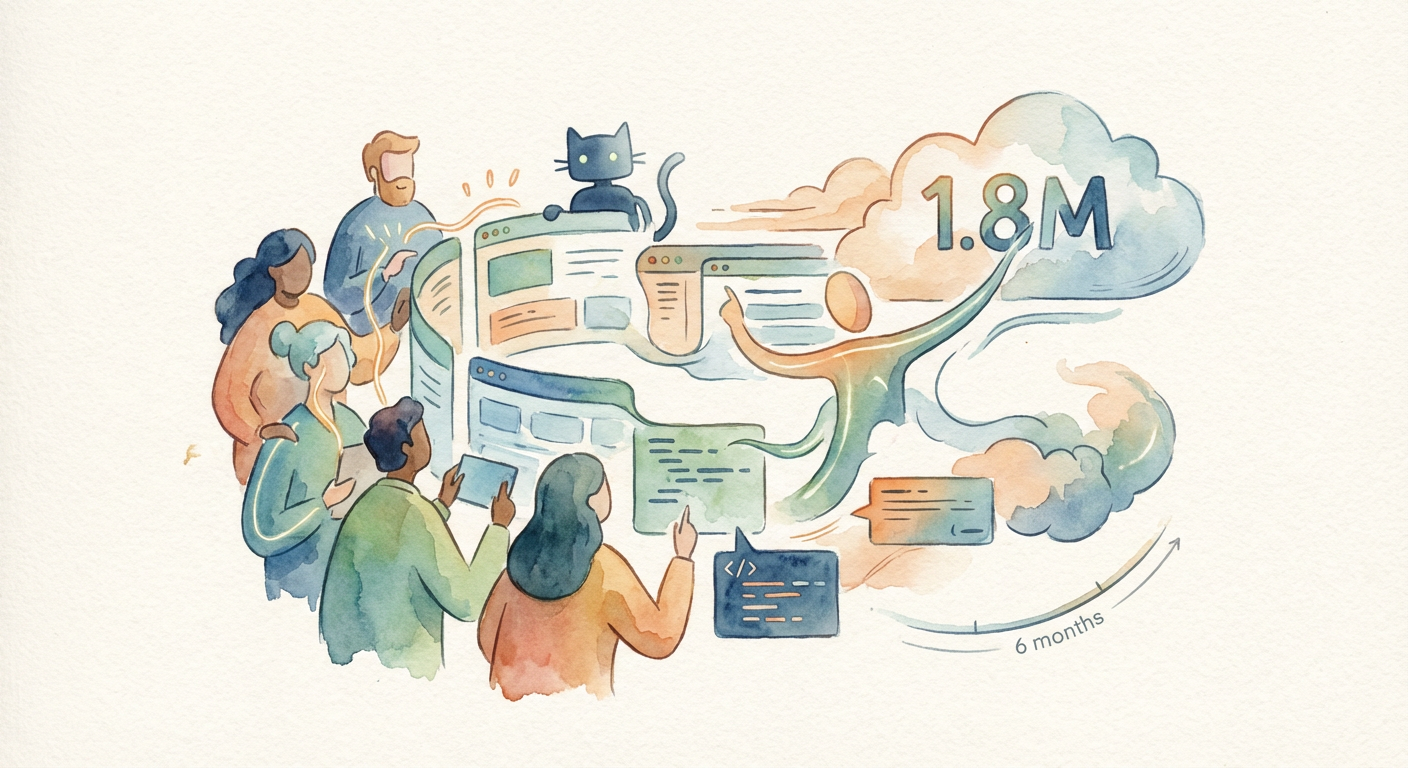
GitHub Copilot Workspace hit general availability in late 2025, and the pitch was clean: take an issue, let the AI handle the whole pipeline from planning to pull request, stay in the browser the entire time. No context switching. No grunt work. Just ship. Over 1.8 million developers signed up within six months. The hype was real. The speed was impressive. And then reality started whispering uncomfortable truths in pull request reviews.

I spent the first two weeks of 2026 watching junior engineers lean on Workspace like a crutch that was subtly reshaping their walk. The tool generates code that looks correct. It compiles. Tests pass locally. Then it hits production and something feels off, or worse, breaks in ways that aren’t immediately obvious. This isn’t because Workspace is broken. It’s because there’s a category of judgment that still lives exclusively in the senior engineer’s skull, and no amount of token prediction can replace it yet.
The Logic Error Gap That Won’t Close in One Release Cycle
Here’s the number that keeps me up: a Stack Overflow survey from late 2025 found that 76% of developers actively using AI coding tools report spending significant time hunting down logic errors that the AI generated. Not syntax errors. Not silly mistakes. Logic errors. The kind where the code does exactly what the AI thought it should do, but that’s not what the system actually needs it to do. The kind that require understanding intent across service boundaries, consistency constraints, and edge cases that only reveal themselves under load.
Copilot Workspace can see your codebase. It can read your tests. It can even scan your issue tracker. What it can’t do is internalize the unwritten rules baked into your architecture. Why you cache certain queries but not others. Why a particular library is verboten because someone spent six months debugging its interaction with your payment processor. Why consistency must be eventual in this subsystem but immediate in that one. These judgments accumulate over years.
The temptation with Workspace is to treat it like a very smart intern. Fast, eager, capable of generating solid boilerplate. But interns don’t make architectural decisions. They execute them. The moment you ask an intern to decide whether a feature should live in the API layer or the worker queue, you’ve abdicated your responsibility. Same principle applies here, just with better code generation.
Code Churn: When Rewriting Becomes the New Debugging
A study from GitClear published in early 2026 examined codebases where Copilot Workspace had been adopted. The finding: a 41% increase in code churn rates compared to pre-AI baselines. Code churn measures how much recently committed code gets rewritten or reverted. Higher churn usually means something is wrong with the development process. In this case, it suggests developers are shipping code from Workspace that looks good enough to merge, then discovering problems downstream that require significant rework.
This isn’t entirely bad. Iteration is healthy. But there’s a real difference between iterating on ambiguous requirements and iterating because the AI optimized for the wrong objective. Senior engineers develop a spooky ability to smell the latter from across the room. We’ve internalized patterns that work and patterns that fail. We know which third-party dependencies are solid and which ones have ghosts in the machine. We understand deployment complexity in ways that never show up on a code review checklist.
The GitClear 2025 AI Code Quality Report also noted that AI-assisted teams showed higher defect density in certain categories. The tools are getting better at writing code. They’re still learning what code is actually supposed to accomplish in the real world.
The Competitive AI Landscape Keeps Shifting the Baseline
Just when you think you understand the capabilities ceiling, someone pushes it higher. Anthropic released Claude 3.7 Sonnet in February 2026 with extended thinking mode, and it started solving engineering problems at a 70.3% success rate on SWE-bench Verified. That’s a meaningful jump. It changes what’s possible. But it doesn’t change the fundamental asymmetry: the AI can solve well-defined problems faster than humans. It still can’t define which problems actually matter.
This matters because competitive pressure is pushing GitHub and other vendors to keep expanding what Workspace tries to do autonomously. More automation sounds like unambiguous good until you’re debugging code at 3 AM that the AI committed because it technically fulfilled the requirements, just not in a way that scales to your actual production load. The tools will get smarter. The failure modes will evolve. This is the equilibrium we’re settling into: AI handles 80% of the work, humans handle 80% of the thinking.
Visit the GitHub Copilot Workspace documentation and you’ll find a tool that’s genuinely impressive. It’s also genuinely incomplete without human judgment layered on top. That’s not a weakness in the product. That’s reality.
What Senior Engineers Actually Do Now
The useful future isn’t one where Copilot Workspace replaces senior engineers. It’s one where senior engineers get back roughly 15 hours a month previously spent on boilerplate and redirect that time toward decisions that actually matter. Architecture. Team growth. Debugging the weird stuff that only happens when you combine traffic patterns the test suite never dreamed of. Pushing back on requirements that sound right but are actually subtle disasters waiting to happen.
The tools are good enough now that they should be in your workflow. They’re not good enough that you can forget how to think. Not yet. Maybe not ever. The human judgment that separates a system that works from a system that works reliably doesn’t generalize well across billions of parameters. It’s specific, contextual, and hard-earned. It’s also exactly what companies pay senior engineers to provide.
If you’re using Copilot Workspace effectively, you should notice that your code reviews are getting faster at the tactical level and more demanding at the strategic level. You’re catching fewer syntax errors and more architectural mismatches. You’re pushing back on perfectly functioning code that solves the wrong problem. That’s not friction. That’s the system working correctly. The tool expanded what’s possible. Your judgment expanded what’s worthwhile. What does that look like in your codebase? I’d genuinely like to know.