The Four-Year Journey to “Stable”
In December 2024, the Kubernetes community did something that doesn’t happen often: they declared a new networking API production-ready after half a decade of careful iteration. The Gateway API hit GA status in Kubernetes 1.32 release notes, and with that milestone came an unofficial but unmistakable signal that Ingress, the API we’ve all been using since 2015, is now in long-term maintenance mode.

Four years is a long time in cloud-native years. Long enough that some of us wondered if Gateway API would ever actually ship, or if it would become another ambitious RFC that got endlessly debated in GitHub threads while everyone kept using Ingress anyway. The extended timeline wasn’t bureaucratic foot-dragging, though. The Gateway API team was solving a fundamentally harder problem than Ingress ever attempted: designing an API that acknowledges roles.
This matters more than it sounds. Ingress was built for a simpler world where a single entity owned networking end-to-end. Gateway API doesn’t make that assumption. It never did.
The Role-Oriented Architecture That Changed Everything
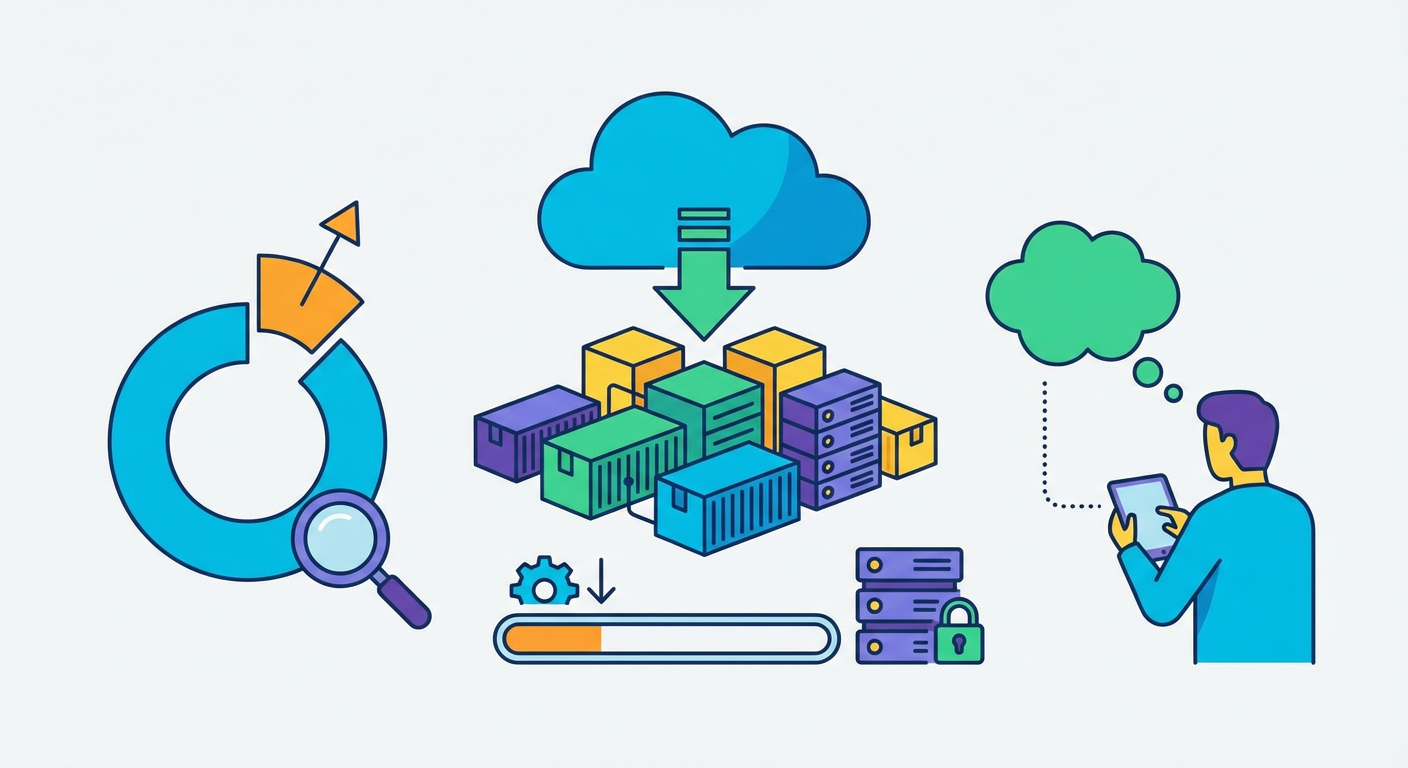
Here’s where Gateway API earns its complexity budget. The API splits traffic management responsibilities across three distinct personas: the infrastructure provider who manages the underlying load balancing hardware, the cluster operator who owns the Kubernetes control plane and cluster networking, and the application developer who just wants their service reachable. Each role gets its own configuration surface, its own concerns, its own permissions model.
On paper, this is elegant. In practice, it means your current organizational structure might not map cleanly onto it. If you’re running a team of four engineers who collectively own everything from the AWS load balancer to the Pod networking policy, you’re not leveraging the design benefits. You’re inheriting the complexity tax without the reward. Teams that have invested in platform engineering, where infrastructure concerns genuinely live in a separate layer from application concerns, will feel Gateway API’s design like a comfortable shoe. Everyone else will feel it like wearing someone else’s shoe that’s technically the right size but doesn’t have your scuffs and creases yet.
The spec includes HTTPRoute for basic routing, TCPRoute and UDPRoute for non-HTTP traffic, and a clean RBAC story where application teams can’t accidentally rewrite the infrastructure layer’s policy. It’s the kind of forward-thinking design that makes sense when you imagine large enterprises running Kubernetes at scale. It also adds real cognitive overhead to smaller deployments that don’t need that separation.
The Adoption Reality Check
Let’s talk about what’s actually happening on production clusters. A KubeCon NA 2024 survey painted a sobering picture: fewer than 15 percent of production clusters had adopted Gateway API resources despite nearly universal awareness that the transition was coming. That’s not a typo. A decade into Kubernetes’ mainstream adoption, with four years of Gateway API development complete, we’re still in the single digits on production usage.
The blame doesn’t fall in one place. NGINX, arguably the most widely deployed Ingress controller in the world, released NGINX Gateway Fabric in 2024 as its Gateway API-native implementation. By early 2026, adoption metrics show it trailing behind Envoy-based solutions like Cilium and Istio’s built-in gateway. This creates a circular problem: NGINX users want to migrate but feel like the native implementation is still stabilizing, so they wait, which means slow adoption metrics, which means less upstream attention from the NGINX team, which means they keep waiting. Meanwhile, Envoy-based solutions have first-mover advantage and the battle-testing that only comes from actual use.
The gap between awareness and adoption is where your migration planning lives. You know Gateway API exists. Your team knows it’s the future. Your boss might even know it. But the gravitational pull of “Ingress still works fine” is real, and it’s not irrational. Ingress works. It’s documented. Every tutorial you find uses it. That inertia is worth respecting in your timeline.
The Mesh-Shaped Complication
If you’re running Istio, 2025’s roadmap threw a wrench into the comfortable “we’ll migrate eventually” approach. The Istio team deprecated their own proprietary traffic management CRDs in favor of Gateway API conformance. This decision ripples across roughly 35 percent of service mesh deployments according to CNCF’s service mesh survey. Translation: if you own an Istio installation, you don’t get to pick whether Gateway API matters to you. It matters to you immediately.
For teams in this situation, the migration decision transformed from “should we” to “when do we” to “how do we do this without downtime.” That’s a different problem. Istio’s deprecation doesn’t mean the old APIs vanish overnight, but it does mean your upgrade path gets narrower with each release. The window for gradual migration is technically open, but it’s on a closing timer you didn’t control.
This is where the mentorship part gets real: if you’re an engineer or architect making this call, don’t let the GA announcement pressure you into a hasty migration. GA means the API is stable and supported. It doesn’t mean your tooling is ready. It doesn’t mean your team has capacity. It doesn’t mean the ecosystem has finished shaking out the performance implications. But it does mean you should have a timeline, and that timeline should account for the role your infrastructure plays. Running Istio? Your timeline is tighter. Running vanilla Ingress? You have more breathing room, but not infinite room.
The Practical Path Forward
Start by inventorying your current state. How much of your routing logic lives in Ingress annotations? How much is in your service mesh? How tightly is your platform engineering team structured around role separation already? These answers shape your timeline more than any generic migration guide will.
Then read the Kubernetes Gateway API documentation not as marketing material but as a specification. Specifically, read it to understand where your current Ingress configuration doesn’t map cleanly. Some things translate smoothly. Some things require architectural thinking. Knowing which is which before you commit to a migration saves you from the kind of mid-project surprise that burns three months in “we didn’t realize it worked that way.”
Run a small pilot. Deploy a Gateway alongside your Ingress controllers. Route a non-critical service through it. Let it break in a staging environment where breakage is fine. Measure the operational overhead. Compare it to what you’re doing now. This isn’t analysis paralysis; it’s risk-appropriate diligence.
The Gateway API is genuinely good design. It solves real problems that Ingress swept under the rug. The four-year development cycle wasn’t wasted time; it was the time required to get the role model right. But good design doesn’t magically equal painless adoption. Your job as an engineer is to figure out where on that timeline your situation lives, and that’s different for everyone. Pretending otherwise is how migrations fail at 2 AM with no good way back. If you’ve navigated this decision for your organization, I’d genuinely like to hear what you learned. The gap between GA status and production adoption is where the real knowledge lives.