The Setup: When Cost Cutting Meets Critical Infrastructure
I’ve watched enough infrastructure projects fail to recognize the pattern immediately. You identify bloat, declare war on it, apply aggressive cost controls, and then discover six months later that you’ve cut through load-bearing walls while trying to demolish the walls around the perimeter. DOGE’s approach to federal IT is probably the clearest recent example of this miscalculation at scale.
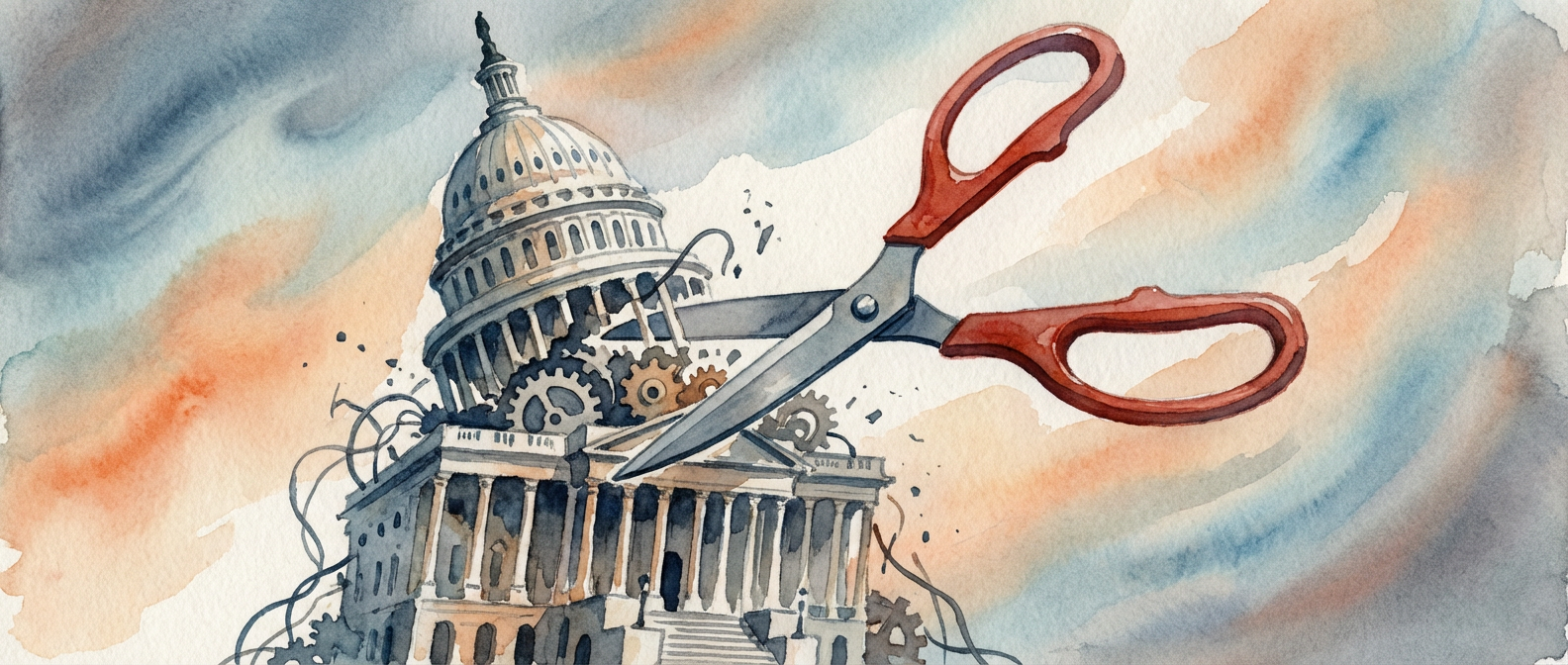
Starting in early 2025 and extending into 2026, DOGE orchestrated staffing reductions and contract terminations across multiple agencies including the Social Security Administration, Treasury, and the Cybersecurity and Infrastructure Security Agency. Thousands of IT and cybersecurity personnel were affected. On the surface, this reads like obvious belt-tightening: identify redundancy, trim workforce, reduce vendor spending. The problem emerges when you examine which systems actually depend on that workforce.
I want to be direct about this: it wasn’t fiscal responsibility applied to legacy infrastructure. It was fiscal responsibility applied without understanding what the infrastructure actually does or why it matters. There’s a meaningful difference.

The First Domino: CISA Loses Its Coordination Capacity
CISA absorbed an estimated 130-person reduction in early 2025 through DOGE-directed cuts. Security researchers immediately flagged the consequences: gaps in federal vulnerability coordination. If you haven’t spent time managing vulnerability disclosure workflows, that might sound abstract. Let me make it concrete.
The vulnerability coordination process requires active human oversight. Someone needs to communicate with researchers who discover zero-days. Someone needs to work with vendors to understand patch timelines. Someone needs to prioritize which vulnerabilities get public guidance and which stay restricted. This isn’t automatable. It’s not like trimming a marketing budget where you reduce headcount and accept slower response times. It’s like trimming the staff managing a nuclear power plant and accepting slower response times to gauge anomalies.
Former CISA Director Jen Easterly didn’t mince words in early 2025 testimony: reducing federal cybersecurity staffing during a period of heightened nation-state threat activity from groups like Volt Typhoon was a strategic own goal. That phrasing stuck with me because it’s exactly right. You’ve scored against your own team. The threat environment didn’t become less severe because DOGE reduced headcount. The adversaries noticed the gap opening and accelerated activity accordingly.
For deeper context on how this played out operationally, CISA workforce reduction coverage – CyberScoop provides useful documentation of the timeline and responses from the security community.
The Vulnerability Database Collapse: When Backlog Becomes Strategy Failure
Here’s where this story moves from concerning to genuinely alarming. The National Institute of Standards and Technology maintains the National Vulnerability Database, which is the authoritative source for CVE analysis in the United States. This database doesn’t maintain itself. It requires skilled analysts who understand vulnerability taxonomy, can assess severity, and can provide context that helps organizations prioritize patching.
Beginning in early 2024 and continuing through 2025, the NVD experienced a prolonged enrichment backlog due to funding and staffing constraints. Thousands of Common Vulnerabilities and Exposures accumulated without analysis. If you’re not steeped in this world, the consequence might sound minor: organizations get CVE identifiers a bit slower than before. The actual consequence is more serious. Organizations rely on NVD enrichment to understand whether vulnerabilities affect their infrastructure. Without that analysis, they operate blind. Security teams can’t effectively prioritize. Patch management becomes guesswork.
You can check the current status yourself via NIST NVD backlog status tracker. The numbers speak for themselves, and they paint a picture of analytical capacity that hasn’t recovered.
The Smoking Gun: Treasury Department Access Incident and Congressional Response
In February 2025, DOGE-affiliated personnel gained access to Bureau of Fiscal Service payment systems at the Treasury Department. These systems process over 5.45 trillion dollars in annual federal payments. Let that number sit for a moment. That’s not abstract government money. That’s the financial infrastructure delivering Social Security checks, federal employee salaries, and veterans benefits.
The incident triggered congressional oversight hearings. Congress doesn’t convene hearings about routine system access. They convene hearings when the fundamentals of government financial infrastructure get compromised. The access wasn’t just theoretical: personnel affiliated with the cost-cutting initiative gained visibility into systems that absolutely require isolated, monitored, and restricted access models.
This crystallizes the core problem. You can’t apply efficiency measures designed for general-purpose IT infrastructure to systems that manage critical financial flows. The governance requirements aren’t overhead. They’re structural. They exist because the consequences of failure aren’t operational delay. They’re economic disruption.
The Lesson: Legacy Systems Demand Respect, Not Contempt
I’ve built systems, maintained systems, and inherited systems left behind by people who treated infrastructure as a cost center rather than a strategic asset. The pattern repeats reliably: aggressive cost cutting that feels intellectually pure in the moment produces consequences that emerge later and cost exponentially more to remediate.
Federal legacy IT is a case study in this dynamic. These systems didn’t accumulate staffing because of bureaucratic bloat. They accumulated staffing because managing the Social Security Administration’s payment infrastructure, Treasury’s financial operations, and the nation’s cybersecurity coordination actually requires people. Those people perform specialized work that can’t be automated or outsourced without creating systemic risk.
Efficiency in infrastructure means something different than efficiency in marketing departments or administrative overhead. In infrastructure, efficiency means doing necessary work with optimal resource allocation. It doesn’t mean eliminating work that feels redundant because you don’t immediately understand why it exists.
What’s your perspective? Have you encountered similar patterns in organizations where you’ve worked, situations where cost-cutting felt justified until you understood the actual operational dependencies? I’m genuinely interested in hearing from engineers who’ve navigated this tension between fiscal responsibility and maintaining critical capacity. Drop thoughts in the comments or reach out directly.