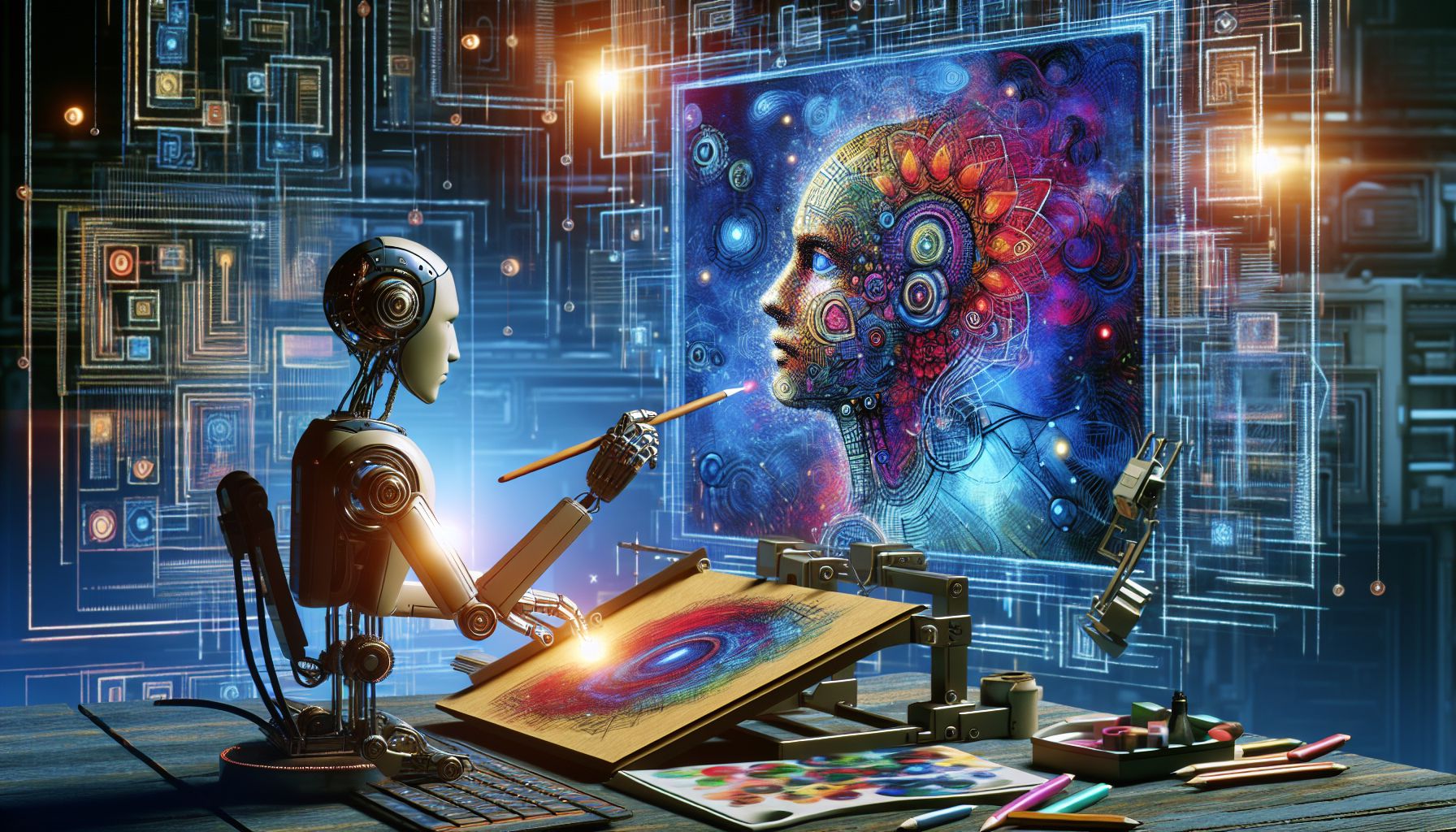
Hey fellow tech aficionados! Today, I wanna dive into something that’s been tickling my imagination for a while – the emergence of Artificial Intelligence in creative arts. Yes, I’m talking about algorithms run wild in the world of paintbrushes, pianos, and poetry. Whether you’re a skeptic or a cheerleader for AI, you’ve gotta admit what’s unfolding is fascinating as hell.
The Dawn of Creative AI
Once upon a time, the idea of machines getting creative was the stuff of science fiction. We all saw movies like Ex Machina or Her where AI developed a ‘human touch,’ and we thought, “Pfft, yeah right.” Fast forward to today, and we’ve got algorithms generating artwork that’s not just engaging but also inspiring. Take DALL-E, for instance, the brainchild of OpenAI, or the more recent Midjourney. Both sparked a fresh wave of innovation with their ability to turn text prompts into full-on artwork that could easily hang in a modernist gallery.
From Coding to Composition
Let’s get nerdy for a sec. At their core, these AI models are whiz-bit number crunchers called neural networks. They learn patterns from datasets and somehow grasp what makes Van Gogh’s swirls scream “Starry Night” or why Picasso’s cubism looks like Picasso dreamed it up after a wild, surreal party.
Now, these models are creating music too. I’m sure you’ve heard of AIVA, an AI composer that writes symphonies that sound like they came from the mind of an 18th-century maestro. AIVA won’t snag a Grammy (yet), but it shows AI’s potential to generate and manipulate soundscapes. Beethoven meets the microchip, folks.
The Human-AI Tango
The Coexistence of Organic and Synthetic Creativity
You might be thinking, “Awesome, machines can paint, so what?” Here’s the kicker: AI isn’t just copying us. It’s collaborating with us. Digital creatives aren’t out of a job. Instead, they’re finding new tools to amplify their imagination. It’s like having a highly skilled intern who never sleeps, doesn’t need coffee breaks, and is always ready to bring your wildest concepts to life at 3 a.m.
Some musicians and artists are already embracing this digital muse. Grimes is all in with AI, exploring new frontiers in sound and visuals that traditional instruments and human hands couldn’t achieve alone. Rather than replacing creativity, creative AI is enhancing it, opening new doors to artistic avenues we never knew existed.
The Ethical Frontier
Yet, it’s not all sunshine and rainbows. The growing presence of AI in the creative fields brings a bundle of ethical puzzles. What defines art if a machine can whip it up in seconds? Who owns the rights to a song composed by an algorithm? More importantly, what happens when an AI’s generated content ends up copying human artists, either through mimicry or unauthorized reproductions?
While these questions are challenging, they’re exactly the sort of dilemmas that make tech endlessly thrilling. As we navigate through these murky waters, the industry will need to establish guidelines and norms so creators are fairly treated and their work is adequately protected.
The Future of AI in Creative Arts
Speculation Station: A Peek into the Crystal Ball
Now, let’s put on our futurist hats and speculate a bit. I envision a world where AI creative tools are as common as Photoshop or GarageBand, maybe even embedded in them. Future apps could integrate AI to suggest brush strokes or musical notes, pushing creators to venture beyond their norm and into worlds unknown.
We might see a time when ‘AI art galleries’ become mainstream, where the exhibited pieces are co-creations and viewers can interact with them in real-time. Museums of the future could have installations that adapt dynamically to viewer interactions, with AI curators tailoring experiences on the fly. Sounds pretty sci-fi, but we’re closer to this than you might think.
Conclusion: Imagination Meets Innovation
So, what’s the takeaway here? AI’s impact on the arts is pure techno-utopian stuff. While the journey comes with its share of hurdles, the potential to enrich human creativity is massive. We’re witnessing a blend of human intuition and machine precision that could redefine not just what art is, but also who can create it.
AI in creative arts isn’t about replacing humans. It’s about expanding our capacity to dream and create. It’s about removing the ceiling of what’s possible, giving us a chance to gaze into infinity and beyond, one algorithm at a time. So, gear up and paint your canvas, or code it, if you dare! The future of creativity looks pretty damn exciting.
Let’s keep the conversation going. Do you see AI as a partner or a competitor in the arts? What are your hopes or fears about these developments? Drop your thoughts in the comments. Until next time, keep innovating!